Showing posts with label sous vide. Show all posts

Sunday, 26 October 2014

october offerings' PICKLED LAMBS TONGUE .'


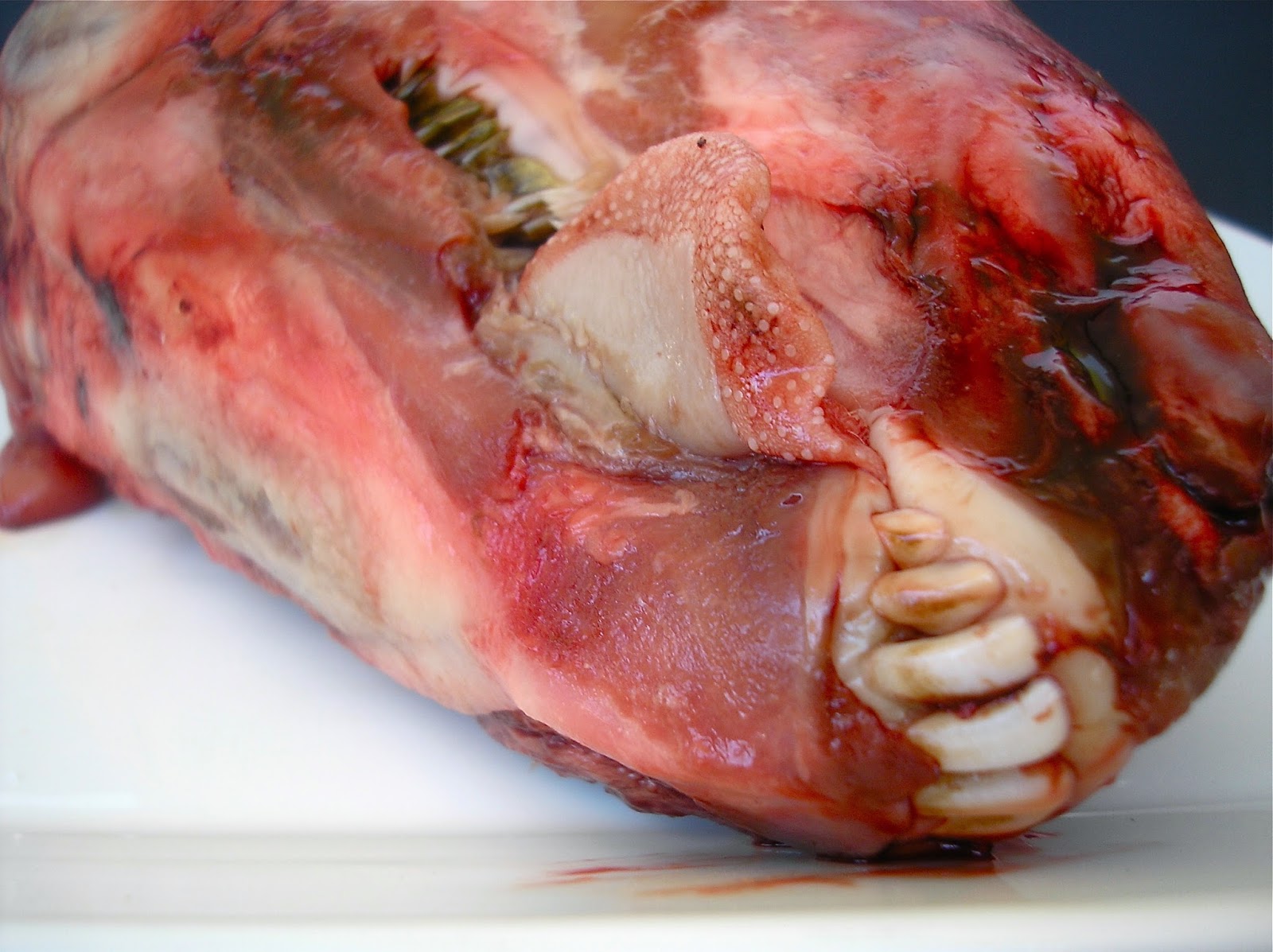
Pickled Organic grass-fed Lambs tongue with Sous vide Baby beetroot in raspberry sauce, Sheep's milk Curd snow, Apple & German chamomile oil and chamomile leaves. 

                 The third instalment of the 'october offerings', this dish is a variation of one that was getting around the tables of L'Enclume a few years back. The sheep's milk curd snow is very light and delicate but refreshing against the earthy sweetness of the raspberry sous vide beets and the apple infused oil. All giving way to the acidity of the pickled tongue and its strong lamb flavours. The pickled tongue underwent a 3 week brining and pickling process listed below, before it was sliced thinly to be served.        
                 After the tongue was detached and removed from the sheep head, I rinsed the tongue under cold running water before placing the tongue into a glass container. I then prepared a brine of salted water, covering the tongue with the brine and refrigerating overnight covered. The next day I rinsed the tongue under cold running water again before this time simmering the tongue on a medium heat in a  brine of water, apple cider vinegar and salt for about 2 hours until the tongue was tender. The tongue was then rinsed again and the outer membrane was removed. In a saucepan I brought to the boil some water, vinegar, salt, sugar, mustard seeds, fennel seeds, cumin seeds, coriander seeds and peppercorns. I then placed the tongue into a sterilised jar and covered the tongue with the cooled pickling liquid, securing the jar with a lid, the the tongue was placed into the fridge and allowed to mature for 3 weeks. To make the curd snow, I first made the curd as per earlier posted this month. Only once the curd was drained of all its whey, I formed a ball with the curd and placed it into the freezer to freeze solid. Once the curd was solid, using a grater I shaved the frozen curd to form a powdery snow. In a small saucepan I gently heated some olive oil with a few strips of apple peel and some german chamomile leaves. The oil was then removed from the heat and allowed to stand and infuse until cool. The oil was then strained through cheese cloth and ready to be used. The last application was the beets of which I simply peeled, quartered and placed into a food grade plastic pouch with some frozen raspberry sauce. The pouch was vacuum sealed and placed into a 84C water bath for an hour. The beets and sauce were then removed from the pouch and chilled before being served.


Saturday, 28 June 2014

' EGGS BENEDICT. V-1.1 .'

70 degree C. Egg yolks, Poached whipped egg whites, House hollandaise, Crispy parma ham, Maple bacon curls, Toasted English muffin, Olive herb and Tarragon sprigs.


                    Eggs Benedict is a classic breakfast dish that has stood the test of time and the basic four ingredient combination of bacon and poached eggs on an english muffin with hollandaise sauce, has been a target for deconstruction, reconstruction by many a modern day chef. In this version (1.1) I've employed some of the techniques to the eggs made famous by chef Wylie Dufresne's Eggs Benedict served at his world renown WD-50 restaurant. Wylie does his egg yolks sous vide 70C for 17 minutes producing yolks that have a texture of soft dense fudge that coats your mouth. And another of his techniques is to poach whipped seasoned egg whites in barely simmering water, forming a savoury meringue that is delicate and dissolves in your mouth. This plate took me back to the days at Acland St.
St.Kilda in Melbourne where I served time as a breakfast chef, starting my commute to work at 4am to get to the restaurant to set up for busy breakfast crowds of Eggs Benedict and some its variations. My main task and one of the two main tests I had to keep my job was the big batches of 2 dozen egg hollandaise sauce, there would be two to do sometimes three. My first morning on my own after earning the trust of head chef to make the sauce I split the sauce halfway through, a bit of panic set in with the time I had lost not to mention the eggs. I managed to get it back with a little cold water and I was saved, since then I've never had to make such large quantities of the sauce so I use a quick method which is fail proof using a blender.                                                                                                                    
                    I've outlined the techniques and methods to this dish below in order of execution .
70C SOUS VIDE EGG YOLKS- For the yolks I lightly beat the yolks breaking the membrane up and then seasoned them with a little salt and pepper. I then placed the yolks into a sealed piping bag and in a 70 degree C. water bath for 17 minutes but after cutting the tip of the bag and trying to pipe the yolks were still runny so the piping bag was sealed again and placed in for another 30 minutes at which I achieved the texture of fudge.
POACHED WHIPPED EGG WHITES- In a mixing bowl I placed some egg whites with a little seasoning and using the electric whisk, I whipped the whites to a soft peak before adding a little cream of tartar and whipping to a stiff peak. Using two dessert spoons I made quenelles and placed them gently into an 85 degree C. water bath to poach, turning over after 2-3 minutes and then removing with a slotted spoon.
HOUSE HOLLANDAISE- This is my quick, fail proof easy blender version and not the traditional over the stove whisking until your arms drop off in hope through the whole 10-15 minutes that you don't split it and ruin your work. So here goes on the stove I gently melted 10 tablespoons of unsalted butter without letting to much liquid to evaporate off the butter. In a blender I placed 3 egg yolks, 1 tablespoon of lemon juice, a pinch of both salt and cayenne pepper, blending on a medium speed until the mixture becomes lighter in colour about 30 seconds. The friction from the blades heats the yolks up a bit and the blending motion adds air making the mix light and fluffy. I then turned the blender to low and drizzled the melted butter in slowly while the blender was running, continuing to blend for further 5-10 seconds until the butter incorporates. Store beside the warm stove top until ready to serve.
CRISPY PARMA HAM- I placed thin slices of the parma ham on to a lined baking tray and baked the ham lightly on both sides in a 160 degree C. oven until crispy.
MAPLE BACON CURLS- To make these which give a sweet element to the dish I simple rolled maple cured streaky bacon and fixed them with a tooth pick before basting in maple syrup and pan frying until caramelised and crispy, removing the tooth pick to serve.
TOASTED BREAKFAST MUFFIN- To make this I simply sliced thin slithers of the muffin, rubbing them in the rendered fat from the bacon and maple syrup, before lightly toasting both sides under a grill.
OLIVE HERB & TARRAGON- Both these herbs make the perfect match for egg dishes and were both harvested from our veggie garden to be used as finishing garnish for this plate.


Sunday, 22 June 2014

' 64.C poached & fried EGG with ASPARAGUS .'

64 C. poached & fried Free range Hen egg, French Tarragon infused Asparagus ribbons, Crumbled croutons, Balsamic vinegar reduction, Fresh Tarragon and Viola flower.

              The night temperatures have dropped quite rapidly here at the moment but our hens are in their first season and are laying strong through the start of our winter. Hence the egg recipe, which is in fact a recipe from the great Eddie Shepperd, award winning vegetarian chef in the U.K. I chose to use, (copy what ever you may call it) Eddie's recipe because of his use of techniques in making the dish, the simple egg cooked in a way you can really appreciate eating it and accompanied by the perfect pairings. We got our three girls going on 3 months ago now and if there was an eighth day in the week we would get 2 dozen eggs. We couldn't be happier, they couldn't be happier and its a great mutualistic  relationship. Free ranging is a different story, almost everyday the Isa brown gets out and I'm having to go and retrieve her from next doors backyard, the park or half way up the street where she's foraging on someones front lawn. Anyway below I've listed the techniques to this tasty vegetarian breakfast of asparagus and egg with crouton and balsamic reduction.                                                                          
            To begin with I started with the asparagus, setting my sous vide machine to 85C. I then vacuum sealed asparagus spears with a little butter and some fresh tarragon from the garden. The sealed asparagus was then placed in the water bath and cooked for 15 minutes before being removed and placed in an ice water bath to stop the cooking. Once the asparagus was cool enough I sliced them into halves or ribbons and dressed them with a little olive oil, a squeeze of lemon juice and a little salt and pepper to season, these were then stored in the fridge and warmed gently before serving. I then set the sous vide water bath to 64C. and carefully placed the egg in the bath with the shell on, cooking the egg for 1 hour. Once the egg was ready I broke the egg into a frying pan, frying the egg for a 30 seconds on one side only before removing and plating immediately. While the egg was cooking I prepared the balsamic reduction and the croutons, beginning with the reduction I placed some balsamic vinegar into a saucepan with and brought to slow simmer, reducing the vinegar by a third. This was then set aside to thicken up. Next I prepped the croutons by tearing up some good quality white bread and frying the pieces in a little olive oil and garlic until golden in colour. I the crumbled the croutons up lightly and seasoned them with salt.                                                                                                                            
               To plate I placed the warmed asparagus in the centre of the plate in a loose bundle letting them sit where they naturally fell. I then placed the hot poached then fried egg on top of the asparagus and seasoned with salt and cracked black pepper. I then scattered the crumbled croutons in a rough line starting from the top of the egg out to the edge of the plate. Delicately dotting the thickened balsamic to make an arch around the egg and finally garnishing with a fresh viola flower and a sprig of fresh french tarragon from the garden.


Friday, 13 June 2014

' ALPINE POTATOES .'

Fingerling Potatoes in a progression of textures & temperatures, - Baked Potato skin, Potato salad, Raclette potato, Juniper roasted potato, Potato soup and Crispy potato spoon & bowl.

                  First of all I must apologise to the followers of this blog for the lack of posts lately, as I have
just had surgery on my foot I haven't been able to make it into the kitchen or the backyard having said that, which is where my inspirations come from. Anyway here it is the first post for winter for this year and for a fitting kick off 'the humble potato'. This dish exposes the diner to the many ways the potato can be served. I've used the alpine theme with the likes of pine needles, conifer and juniper berries to act as the main component in flavouring the potatoes. The berries, like the needles, have a clean, bracing botanical flavour. This plate takes the diner on a progressional journey of textures, temperatures and techniques, making the boring old spud look a bit more enticing. Below I've highlighted each prep and its respective technique, these are not in any order of execution but for a tip letting the puree for the 'Raclette potato' hydrate over night does help with this technique.                                                                
BAKED POTATO SKIN- (hot, cold) Juniper, creme fraiche, caviar.                                                          
This is a taste of earth, sea, pasture and forest. To begin with I made a juniper oil by blending juniper berries with olive oil and straining the oil through a mesh sieve. I then baked the potato in a 170 deg. C. oven until tender. I then cut the potato into wedges, scooping out the pulp, the skin was then rubbed with the juniper oil and placed back in the oven to go crispy. Once removed, I placed a dollop of creme fraiche on to the skin and topped with black caviar, serve immediately.                                                        
POTATO SALAD- (cold) Pickled 83 deg. C. sous vide potato, mustard mayo, pine snow.                    
83 degrees is the optimum temperature for sous vide vegetables. Cooking the potatoes in vinegar and salt pickles them as they cook and the pine needle snow gives a refreshing jolt against the spice of mustard and the earthy potatoes. Thinly sliced potatoes, a dash of white wine vinegar and a pinch of salt were placed into a vacuum sealed bag and placed in to an 83 deg. C. sous vide bath for 90 mins. Once the potatoes were tender, the potatoes were removed from the bag and chilled in the fridge until cold. To make the pine snow I blended washed, finely chopped pine needles with water and a little glucose. This was then passed through a cloth lined sieve an poured into a plastic container and placed into the freezer. At the same time I placed a metal bowl in the freezer to chill. Once the the pine water was frozen solid I grated the ice into the metal bowl and placed the bowl of snow back into the freezer until I was ready to serve. For the mustard mayo I mixed two parts prepared mayo with one part wholegrain mustard and seasoned with a little honey and salt, this was also chilled to serve.                          
RACLETTE POTATO- (warm) Potato puree, Raclette cheese.                                                              
Raclette means both a type of cheese and also the name of a traditional Swiss winter meal where a round of cheese is placed by the fire and then the melted part of the cheese is scraped onto plates and accompanied with potatoes, gherkins and other fare. Raclette cheese has fantastic melting properties and is perfect for this technique. I used methocel for this preparation which forms a firm gel when heated and reverts back to its original state (in this case a puree) as it cools. But for best results it should be hydrated over night. I started this prep by boiling potatoes in salted water until tender. I then pureed the potato with a little melted butter, milk and a pinch of salt. I then added 5g methocel to 100g of water and blended with a immersion blender for about 2 minutes, this was then mixed into 160g of puree and placed covered in the fridge over night to hydrate. The next day I preheated the oven to 120 deg. C., I then filled a mould with the puree (in this case I used an eggshell for the mould), this was then baked for 8-10 minutes. Once firm the hardened potato puree was un-molded on to a lined baking tray, I then placed a thin slice of the raclette next to it and placed the tray back in the oven to melt the cheese. The cheese was then scraped from the tray lining and draped over the potato, smoothing the cheese to form a skin. With a strong brew of coffee paste and a small paint brush, I added some markings to resemble the potatoes imperfections and eyes. The potato was then lifted and plated to be served immediately.          
JUNIPER ROASTED POTATO- (hot) Coffee oil, juniper berries, sea salt.                                                  
With this I roasted the potato in juniper berries, the virgin coffee oil  rounds out the woody notes of the berries nicely. I simply roasted the potato in a 180 deg. C. oven with crushed juniper berries and a little olive oil, once tender the potato was served hot on a bed of conifer and the potato was topped with a drizzle of virgin coffee oil and a sprinkling of juniper berries and sea salt.                                        
POTATO SOUP- (hot) Smoked potato, blue cheese, gin.
Comforting, creamy earthy potatoes with the complexity of smoke, combined with the tang and bite of blue cheese with a kiss of gin. I first boiled potatoes in salted water until tender, once cooled I smoked the potato lightly before blending to a puree. In a saucepan I heated a little butter, milk and blue cheese until the cheese and butter had melted, to this I added the smoked puree and a splash of gin, seasoning with salt and pepper this was served hot.                                                                                
CRISPY SOUP BOWL & SPOON- Potato.                                                                                                
The final prep I carved a bowl and spoon from two larger potatoes, rubbing with a little olive oil and seasoned with sea salt I then roasted the potato spoon and bowl in a 180 deg. c. oven until crisp and crunchy. To ensure the soup bowl didn't leak soup everywhere, I prepared a water gel with a little gellan gum and lined the inside of the bowl. A great way to finish.                                                          


Wednesday, 21 May 2014

' UNSEASONAL OFFERINGS .'

King Island Diary Roaring Forties Blue cheese with Olive Caramel sauce, Salt cured Baby Roma tomatoes, Melon confit, Smoked Black Muscat grape, Young Celery leaves and Baby coriander.

               I'm not a real fan of blue moulded cheeses and I put it down to that first experience. I can recall mine vividly as my German father was born in Tilsit he would some times be giving by his german friends or buy himself Tilsiter or Cambazola. I was the the later also known as 'blue brie' needed to be vacuum sealed, locked up, frozen or something, when that came out of the packet the two cats ran away. The smell was of rotten socks and vomit and my dads breath after eating the tiniest piece, can't be described here, this kind of put me off blue mould cheese. Until this one popped up from this respectable cheese maker, its creamy and mild with a sweet nutty aftertaste and no repulsive odours. So this was marked down the other day and I picked up a wedge, to do some pairing exercises.
Now what was I to pair with this cheese and I foraged through the fridge. When you have children your fridge tends to store some unseasonal items, such as the rockmelon that Caleb our 6 yo. takes to school every day despite it being nearly the start of winter. Or the baby Roma tomatoes, or the black muscat grapes at the bottom of the crisper. Its quite insane the world our kids are being brought into if you really look into it. The children of today don't know seasonal foods as they see their favourite bright coloured sweet fruit or vegetable, supplied almost all year round in our supermarkets. Will this in time bring about whole new food pairings in the cooking of the future. Anyway it happens to be that these ingredients are well known match makers with cheeses and so I set out to make an 'unseasonable offerings'. Wanting to incorporate olives in the dish, I decided to go with a sauce I had seen done before
infusing olives in a caramel sauce.                                                                                                              
               Most of the preparations in this dish required about the same time so these can be done in any order . Below I have listed the preparations for this dish.                                                                                
Smoked Muscat grape- I put together a boat from aluminium foil and placed some dampened hickory saw dust into the boat and waited for my smoker to heat up. I then placed the boat in the bottom of the smoker and waited until the smoker was full of smoke. Placing a grape on baking paper over a metal bowl of ice and into the smoker on a wire rack above the boat. I smoked the grape with a low heat on the burner for about 5-6 minutes and then switched the burner off and continued to smoke the grape for another 5-6 minutes before removing and cooling at room temperature.
Salt cured tomatoes- For these I first got a saucepan of salted water on the boil, then making a tiny cross incision with a paring knife, so just the skin was cut. These were then put into the boiling water for about 2 minutes, the skins were just starting to come away from the flesh. I removed them from the saucepan and placed them into a chilled water bath before removing the skins with ease. the skinless tomatoes were then drained and placed into a bowl of kosher salt covering them partially. They were then placed into the fridge to cure for around 30-40 minutes before being rinsed under a slow trickle of cold water to wash off the salt, they were now ready to serve.                                                                         
Melon confit- To make this I set the sous vide water bath to 53 degree C. and in a vacuum sealed plastic pouch I placed melon shavings about 2m thick and frozen rockmelon juice with a little rice wine vinegar, this was cooked at set temperature for 30 minutes before being removed from the pouch. The shavings were rinsed under cold water to remove the juice and then rolled into a scroll and dressed in a little olive oil and seasoned with salt.                                                                                                                 
Olive caramel sauce- This sauce was adding 2/3 cup of white sugar with about 3 tbsp. of water to a heavy based sauce pan on a medium heat until all the sugar had dissolved and there was a cloudy syrup, being sure not to touch the pan up to this stage. When the sugar starts to bubble I turned the heat up to high and while stirring cooked the caramel until it was a beautiful amber colour. I then added 1/4 cup of black olive puree stirring with a wooden spoon to incorporate, the olive caramel was then removed from the heat and I added a touch of water to form a more sauce consistency. This sauce is served at room temperature.                                                                                                                             


Friday, 11 April 2014

' 53 deg . C . LAMB SOUVLAKI in GRAPE LEAF .'

53 degree C. Sous vide cooked Tassie Royal Lamb Souvlaki in Grapevine Leaf served with Minted Greek yoghurt , Preserved lemon , Salted capers , Black garlic paste , Fried parsley and fresh oregano.


                  During the week I visited my favourite independent grocers 'food fantasy' after work. I love going to this humble little food hub and its been a few weeks now that I had paid a visit to the store. A different delicacies were on offer, I picked up a pack of brined grapevine leaves ( good,big,green ) about a dozen in total for $2.20 AUS. While I was in the store foraging I came across fresh Kalamata olives and when I asked one of the staff what was involved in the prep of the olives, he went out the back and got the little old Italian lady. Familiar with my face she talked me through the four week process of brining the olives while hand selecting me a half kilo into a bag that I'd requested. The olives were $6 a kg. costing me $3 AUS. for my Kalamata olives. So I guess the trip to the 'food fantasy' and the butchers for the quality piece of free ranging grass-fed lamb from greener pastures of Tasmania have been the inspirations of this Mediterranean flavoured cuisine.                                                          
                 This was a very simple dish to make I began by marinating the lamb overnight in the fridge in a vacuum sealed pouch containing butter, dried oregano, smoked paprika, dried thyme, salt, white pepper, a pinch of cumin and a little garlic paste. The next day I set the sous vide machine to a water bath temperature of 53 degrees C. and cooked the pouch of souvlaki marinated lamb for one hour. during this time I prepped the accompaniments firstly the minted yoghurt was a mixture of greek yoghurt, fresh mint from the garden finely chopped, a little garlic paste, drizzle of olive oil and a squeeze of lime juice before being lightly seasoned with salt. To make the black garlic paste I simply blended black garlic with a little olive oil to form a puree. The preserved lemons was an earlier prep, I mean way earlier, like this time last year or earlier. These are simply preserved over time in jars packed with salt and filled with lemon syrup. Over the time the skins soften and the pulp turns to the preserving liquor it is the skins that are scraped back and rinsed before being added whole or diced into dishes to give an up lifting citrus element to the dish. The capers were store bought but have been drained and mixed with himalayan pint salt in a container in the fridge for a number of months now. Once the lamb was ready I removed the lamb from the pouch and straight into a hot pan with the juices of the pouch poured over the lamb while it quickly seared on both sides of the fillet. Once the outside of the meats proteins had caramelised I removed the fillet from the pan placing it straight at the bottom of a spread brined grapevine leaf on a cutting board. The lamb was then rolled in the leaf and returned to a hot pan with a little olive oil to cook the outsides of the leaf, while this was cooking a placed some sprigs of parsley in the hot oil to crisp up. Both the parsley sprigs and the rolled lamb were removed once cooked and left to rest for 3-4 minutes. The parsley was then seasoned with smoked cypress sea salt.                  
                I presented this plate by making a series of random swipes with the minted greek yoghurt. I then sliced the grapevine leaf wrapped souvlaki lamb in to various widths and strategically arranged them around the plate displaying the beautiful perfectly evenly cooked lamb contrasted by the dark green vine leaf. I then added the accompaniments of salted capers, preserved lemons, black garlic paste, the crunchy fried parsley and to finish the dish fresh micro oregano leaves from the garden.


Monday, 31 March 2014

' 64 deg . C EGG YOLK CROQUETTES .'

64 degree C. Sous vide cooked Egg yolk croquettes with Pecorino cheese sauce , Micro greens and truffle salt.

                         This little dish is a take on those creamy spanish croquettes that are served at the many tapas bars. I remember vividly as a child, mum would make beautiful creamy corn croquettes and they were to die for and always a welcomed item at the dinner table. The idea to use egg yolks as the filling came from the molecular recipe website, where they used the method of cooking the yolks sous vide to achieve a gelled structure that can't be achieved by boiling or soft boiling the egg. This dish looks very simple but requires great dexterity and technique when handling these delicate egg yolks. By cooking the eggs sous vide gives us the control and guarantees the perfect temperature of 64 degrees the temperature at which the protein livetin denatures and causes the egg yolk to gel and form a creamy custard like consistency as apposed to boiling where the outside of the egg cooks quicker than the yolk leaving us to guess the condition of the yolk and depending on the size of the eggs an extra 30 seconds too long can turn a soft yolk to a hard boiled before your eyes. The recipe I went off called for the pairing of a nutty flavoured gruyere foam, instead I opted to accompany the croquettes with a cheese dipping sauce made from pecorino cheese, which I think is just as nice.                                                  
                          I first cooked the eggs in their shells in a 64 degree sous vide water bath for one hour. The recipe called to cook the yolks on their own floating in the bath for 45 minutes, turning them at 25 minutes. This method can get fiddly and messy if one ruptures during the cooking process. Once the eggs were cooked I de-shelled them rinsing the unset whites from the yolks carefully under running cold water, these were then placed into a bowl of room temp water until ready to be crumbed. As our pullets have just started laying over the last few weeks, I lost a few yolks to what they call blood spots or meat spots in the yolks, this will be less frequent as they get a little older. But at least I'm assured of fresh free ranged organic eggs at our disposal with vibrant yellow yolks from the supplemented leafy greens in their diets. In a bowl I whisked a whole egg with a pinch of salt, this was for the egg wash. I then seasoned some flour in another bowl and in the last bowl I placed some bread crumbs seasoned with salt and some Dorrego pepper leaf. Using my hands I carefully dusted the yolks with the flour, dipping them into the egg wash and then coating them with the bread crumb. In the mean time I heated some light olive oil, enough to cover the croquettes, in a saucepan to 190 degrees cooking the croquettes one at a time for about 2-3 minutes until they were nice and golden in colour. Bringing the oil back up to 190 degrees each time to assure a perfect shell of crumb around the yolk centres. To make the sauce I heated a little butter in a saucepan and sweated off some finely chopped onions. Once they were clear and translucent I removed them from the pot adding some more butter and a little flour I made a roux to which I added gradually milk to form a white sauce. This was seasoned with truffle salt and grated pecorino cheese was added to complete the cheese sauce.                                                      
                           To plate I smeared the cheese sauce on the plate arranging the croquettes on top and garnished with some micro greens. I seasoned the croquettes with a little truffle infused sea salt.


Saturday, 22 March 2014

' 54 deg . C BANANA PRAWN in PEA WATER .'

54 degree C. Sous vide cooked Queensland Banana prawn in a Chilled Pea water & Celery juice broth with Nameko mushrooms, Charred onions, Thai basil, Pea butter & greens.


               In many styles of food over the years, the chefs, cooks, housewives of the world abroad strive to cook meals with complexity and richness in flavour, with meals displaying layers of depth. In the modernists kitchens of today meals are being prepared using a minimalist approach to ingredients but showing execution of great techniques in showcasing these few ingredients and enhancing them. This dish is a good example of bringing out the raw flavours of each ingredient. The onions have been sauteed and caramelised to bring out the sweetness of the onion, the prawn was cooked in a 54 degree C. sous vide water bath with only butter and garlic to accompany. This allowed the prawn to cook evenly trapped in its own juices. I've seen the pea water prepared a little different to mine, with the use of a centrifuge, pea puree is spun at 1200 g's separating the liquid from the solid. My way still requires a pea puree but then this is manually passed several times through a cheese cloth filter. This technique removes the starch from the pea and it is starch which inhibits the body from tasting sweetness. So with most of the starch removed, it leaves the pea water tasting sweeter than the original whole peas used.
              I began by making the juices needed for the pea and celery water, first I put a pot of peas on the boil and roughly chopped celery into chunks. One serving requires 15 g of pea water and 5 g of celery juice so be sure not to over do it. I juiced the celery and ran it through a cloth filter several times before pouring into a glass jar and placing in the fridge to be chilled. Once the peas were cooked I drained them placing into the blender with some cold water and forming a puree. This was then ran through a cloth filter several times and poured into a jar before placing in the fridge to chill. While these were chilling I prepared the prawns in food safe plastic pouches along with a little butter and some garlic paste. This was then vacuum sealed with the food-saver and placed into a 54 degree c. sous vide water bath for 12 minutes. The pouch was then removed and placed directly into an ice water bath and the into the fridge to chill. In a skillet I quickly sauteed some nameko mushrooms and pearl onions before removing. I sliced the onions in half and returned them to a hot skillet face down to caramelise.
            To plate a placed 5 g of filtered celery juice and 15 g of pea water into the base of the bowl. In the centre of this I placed the sous vide prawn topped with pea greens and arranged the nameko mushrooms, micro purple thai basil leaves, charred onions and the pea butter around the edge of bowl.


Friday, 21 March 2014

' 58 deg .C LAMB with CARROT DEMI-GLACE .'

58 degrees C. Sous vide cooked Lamb loin medallions with Caramelised Carrot Demi-glace , Asparagus & Leek Risotto , Asparagus spears , Sauteed Leek and parsley sprigs .


                Back out with the sous vide water oven for another week, as I'm eager cook these fab looking lamb loin fillets (msa grain-fed). I think the one hour, 58 deg. c was perfect for this cut and thickness of lamb but I left the lamb on hold for another 20 or so minutes extra before I got to taking them out and in hind sight a hot skillet when searing with a quicker searing time as well. I accompanied this dish with a Demi-glace and not the average one either. A traditional Demi-glace in french cooking is a rich brown sauce used by itself or as a base for other sauces. The term is from the french word 'glace' when used in reference to sauce means icing or glaze. Made by combining veal stock and espagnole sauce and reduced by half. My version for this is a very simple vegetarian version that is made with carrot juice and soy sauce, reduced and thickened with arrowroot flour. The result is amazing, a rich, complex sauce velvety and deep in flavour that resembles a sauce derived from protein. To this all I added a sauteed asparagus spears and a leek filled with a creamy asparagus and leek risotto.
                To make this plate I started with the lamb loin fillets placing them into food grade plastic pouches along with a little butter, cracked pepper, salt, garlic paste and a parsley sprig in each. These were then vacuum sealed and placed into a 58 degree c. sous vide water bath and cooked for one hour. During this time I prepped the risotto and the Demi-glace, beginning with the risotto I heated some butter in pan until foaming and added thinly sliced leek and sauteed for 2-3 minutes until soft. I then added some chopped asparagus and sauteed for another 2-3 minutes before setting aside. In a large stock pot I brought some chicken broth to the boil before reducing the heat to very low, so the broth was kept warm but not simmering. In a high sided large pan I heated a little olive oil to this I added a two cups of arborio rice and stirred cooking the rice for about 3-4 minutes before adding a cup of dry white wine and stirring for a further 3-4 minutes until the rice had absorbed the wine. I then added two cups of broth to the rice and kept stirring until all the broth was absorbed, to this I added another cup, continuing to stir. I repeated this until 5 cups had been absorbed and on the last cup I added a little saffron threads soaked in milk and the sauteed leek and asparagus. Once all the broth was absorbed I removed the pan from the stove and added some grated parmigiano-reggiano. This was spooned into a casing made buy blanching a one and a half inch leek ring in boiling, salted water before dunking in an ice water bath and then lightly sauteed in a skillet, this was then topped with sauteed asparagus spears. To make the Demi-glace I juiced some baby carrots and ran the juice through a muslin filter, I added 200 g of this to a saucepan with 50 g of good quality soy sauce. This was brought to the boil before being reduced to a low simmer for about 20 minutes until reduced by half, skimming the froth at times. I then removed some of sauce and mixed it with a level table spoon of arrowroot flour to for a paste. This was then added to the sauce and mixed before being removed from the heat and set aside. At this stage the lamb was ready and I opened the pouches and seared the fillets in hot pan until browned all over and then I removed the meat and allowed it to rest for 3 minutes before carving medallions for plating.


Thursday, 13 March 2014

' 54 deg .C KALE ASH encrusted RIB EYE .'

Grain-fed Beef Eye fillet cooked 54 deg.c sous vide & encrusted with Kale ash seasoning served with Potato & horseradish puree , Mushroom & Malt/Rice beer reduction , Green onion , Nasturtium leaves & kale ash seasoning . 

                   This dish has been inspired by the purchase of our new sous vide & vacuum sealer, we got a great deal on the relatively new Sunbeam package with the two machines in one deal. The actual dish is an adaption of the chefs at Food Republic, who use a short rib which is slow cooked sous vide for 3 days. I've opted for the one hour version using a quality cut of grain-fed beef. This dish has only taste in mind from the smoky, barbecue-esque flavour imparted by the burnt kale nestled in a thick veloute of potato and horseradish. Encircled by a sweet, earthy, umami mushroom syrup that almost smells like a faux miso paste its so umami. Even the young nasturtium leaves with a peppery flavour serve its purpose on this plate. And of course it starts from the thirteenth method of cookery 'sous vide'. This type of cooking was adapted in 1974 from commercial packaging applications, by Georges Pralus for use in his french restaurant. The method requires food to be vacuum sealed in food grade plastic and cooked at a constant temperature usually between 50.c and 60.c and for veggies higher, over longer periods of time ranging from 1 hour and in some cases 72 hours. This process allows the item to cook evenly without overcooking the outside and as the juices are trapped while cooking the item becomes more flavoursome and more tender. As this method never reaches the point of 'maillard reaction' or browning which occurs at temperatures well above boiling point. This has been done in a hot pan once cooked in the sous vide bath, to give the cut of meat the caramelised proteins that you get from searing.
                    To make this dish I started by preparing the food pouch by trimming the cut of beef of any fat and seasoned with salt and pepper before placing into the food grade plastic pouch along with a little butter, minced garlic and sprigs of fresh thyme. I then vacuum sealed the package and placed into the fridge until ready to use. Once the water bath had reached 54 degrees c. I submerged the package into the bath and set the timer for 1 hour. During this time I prepared all the other elements to the dish beginning with the Kale ash seasoning. For this I simply laid out kale leaves on to a baking paper lined flat tray and placed into a 180 degree c. oven until blackened and burnt. I then removed the kale and allowed to cool before blending with salt and pepper in a coffee grinder to a powder. Next I boiled some yukon gold potatoes and drained before blending with some melted butter, cream and a little minced horseradish to for a rich, creamy velvety (veloute) puree or sauce. This was reheated before plating. To make the reduction I caramelised some sliced field mushrooms in a heavy based pan before deglazing with some Budweiser beer, as the syrup thickened, I added a few sprigs of fresh thyme and some glucose syrup. The green onion was pan seared quickly all over before being steamed with sprigs of thyme until soft, sweet and tender. Once the meat was ready I cut open the bag and seared both sides of the steak quickly about 45-50 seconds each side to give the meat the crusty caramelised exterior. The meat was then allowed to rest for 2-3 minutes before coating both sides with the kale ash seasoning.
                    To plate I reheated the puree and syrup and spooned some puree in the centre of the plate, encircling this with the caramelised mushroom and malt/rice beer reduction. I then placed the 54 deg.c. rib eye on top of the bed of potato and horseradish veloute. The green onion then crowned the steak with nasturtium leaves scattered around and to finish a ring of kale ash seasoning.