Showing posts with label deconstructed. Show all posts

Sunday, 23 February 2014

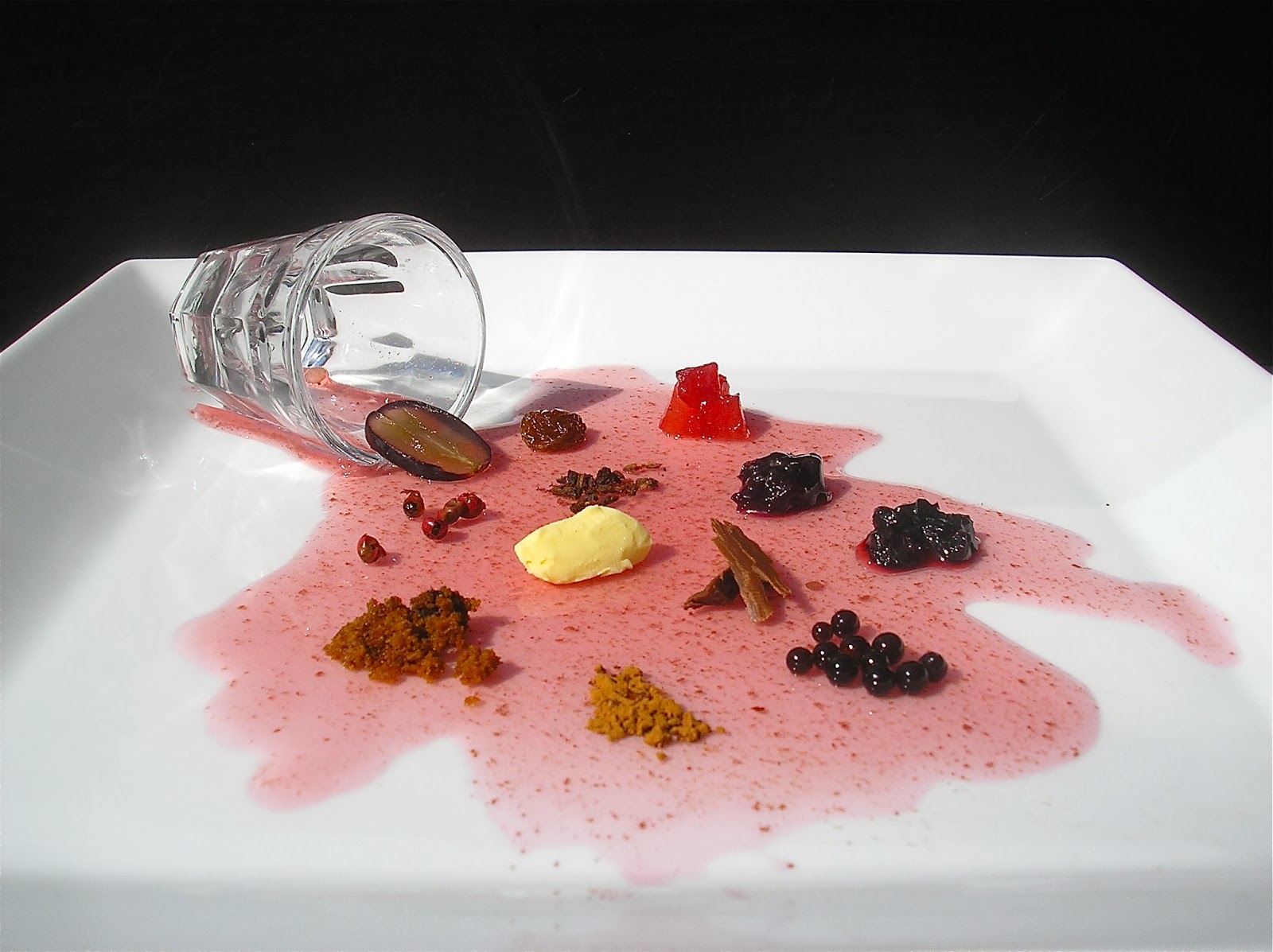
' deconstructed RED WINE .'

Fermented Black Grape juice Gelee accompanied with 12 Ingredients associated with red wines : ( black grape, raisin, plum, cherry jam, cloves, pink pepper, house butter, fruitcake, cinnamon, chocolate & balsamic pearls ).


            So here we have it my second adaptation of the Jose Andres dish of deconstructed wine, but this time I've stripped back the more complex of wines, the red range. Apart from red wine coming from black grape varieties rather than white grapes, the other most prominent difference to a red wine over a white is the skins and stems remain on the fruit in the crushing stage and in some cases left in full or partial in the fermentation process. This technique is what gives the red its colour and also contains a compound called 'phenolic' which has a substance called tannins. Tannin is the essential difference between reds from whites and is a powerful preservative and since reds are allowed to age for long periods this allows the wine to mature with time.
Tannin has a bitter taste and a dry, puckering mouth feel ( think cold strongly brewed tea ) and as wine ages this mellows to balance out with the fruitier tastes of a red wine. As with the white wine deconstruction I've also accompanied the grape juice gelee with ingredients that associate to the taste but also this time tried to replicate some of the mouth feels experienced with a good red wine.                  
           To make the gelee I've used the same techniques as with the white wine post except for the addition of stems to the juice and after the juice was strained I did a second press of just the pulp and skin to try and excrete some of those tannins. This was achieved by pressing the cheese cloth wrapped skins under weight for a couple hours and collected the juices that ran from this press and added them to the first press.                                    
          As with the whites there are countless influences on the overall taste of a red wine and this may include the techniques employed in making the wine for instance the conversion of malic acid to lactic acid during malolactic fermentation determines the mouth feel from acidic 'balsamic vinegar' to a more creamier mouth feel of say 'butter' or even in some cases of reds 'chocolatey' . The variety of a grape lends individual flavour characteristics as well, for example a good pinot noir has a strong flavour of 'cherries', as a Bordeaux is likened to 'plum'  and a Shiraz is more like 'blackberry' and has strong 'peppery' notes. When a wine is blended such as a merlot, the wine can lend features from both varieties and may have spicy back notes such as 'cinnamon' or 'cloves' and is said to sometimes have a hint of 'fruitcake' in its taste. Climate also plays a big factor in the boldness of the taste of fruit in the berries grown, in more temperate regions wine lends a tendency to have a light, crisper fruit taste more closer to the strawberries, cherries or the 'black grape' itself but in hotter climates the fruit tends to ripen better and will give more bolder fruit flavours of blackberry, blackcurrant or even 'raisins'.                                      
           This plate gives the diner a great selection of ingredients to ultimately use as 'food play'. Experimenting with combinations of flavours and mouth feels to recreate their favourite wine on a spoon or simply create their own blends to enjoy.


Friday, 21 February 2014

' deconstructed WHITE WINE .'

 Fermented White Grape Juice Gelee accompanied with 12 Flavours associated with white wines : ( mint leaf, orange zest, ruby grapefruit, asparagus, lime, rose pearls, white grape, lemon zest,  pink pepper, pineapple, gala apple & pomegranate).  

         This dish here is an adaption from Jose Andres of Washington cafe Atlantico. The cloudy yellow pool at the bottom of the bowl is a slightly fermented gelee of white grape juice and is the base for the twelve flavours commonly found in white wine that are lining the inside of the bowl. Simply take a spoonful of the gelee with one or more of the ingredients and taste. According to Andres the idea " is to trigger those memories of good wine experiences and flavours". I guess its also a great reference point to some of the flavours associated with white wines. The last step to making this dish is decorating the gelee with the twelve components, I have used some of the ones used in the Andres version but also changed a number of them for my own tastes, adaptions, and seasonal availability.          
          This dish not only qualifies for the title of deconstruction, it also qualifies as a slow food and a fermented food. This dish took just a little under three days to prepare and about three minutes to cook. I began making the fermented grape juice gelee by freezing the grapes, this is a technique commonly known as 'cryoextraction' and helps to separate the sweet grape juice from the water in the fruit, which has a higher freezing point. Once the grapes were frozen I placed half a pound of the frozen grapes, 100 ml of water and the juice of a quarter of a lemon in a blender and blended to a puree. This was then transferred to a cheese cloth and the juice was squeezed out over a strainer sitting on top of a pyrex collection jug. I then discarded the grape pulp and skins and was left with one metric cup of juice, of which I covered with clear film and placed in the fridge for two nights and two days to gather natural yeasts and start the fermentation process. On the third day the juice was skimmed and poured into a saucepan with 0.5% agar agar powder and brought to a simmer while whisking to dissolve the agar powder. The juice was then removed from the heat and poured carefully into a serving bowl and placed in a flat spot in the fridge to set. All of the topping ingredients were prepared as you see them except for the rose water pearls which were made by using the cold oil spherefication technique. I put a tall glass of oil in the freezer to chill for an half an hour and in the meantime in a small sauce pan I put some rose water, pink colouring and water with 1% agar and brought to the simmer, whisking to dissolve the agar.
I then allowed the rose water mixture to cool to around 50 deg.c before pipetting into the chilled oil. The pearls were then strained from the oil and washed gently under cold water before being plated.        
            The flavours that attribute certain kinds of white wines have reasons either caused by the region, the climate for that vintage, the variety of grape, the vine structure ( number of bud points, open or shaded fruit), but also the winemaking techniques, fermentation and maturation has a large part of some of these flavours above can be tasted in a wine. I would need a few nights to describe each of the twelve ingredients listed but for an example I'll use apple for instance. In the dish I presented finely diced red gala apple to represent the sweet apple tones in a Chardonnay wine that has undergone malolatic fermentation. This is a secondary fermentation via lactobacillus bacteria which converts the harsh mouth feel of the malic acid ( think green apples ) found in the wine, to lactic acid ( found in milk) which shows up as a more approachable buttery mouth feel yet still retaining the apple- like scents ( think red apples). There are reasons why a wine is citrus or has vanilla notes from ageing in oak and all these different flavour hints or, notes, or bold displays are what this dish is all about exploring.